
ACR (Adaptive Combat Rifle)
Mold the rifle to the mission. Own the fight.

Chadclifford · CC BY-SA 4.0
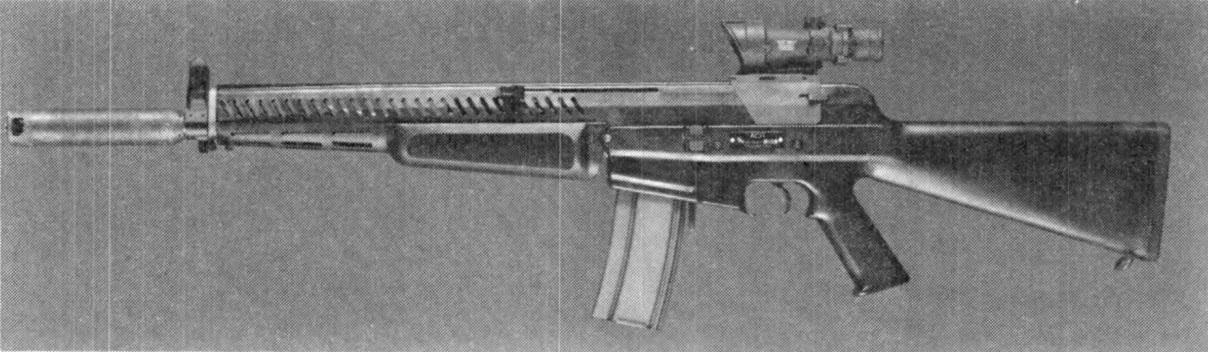
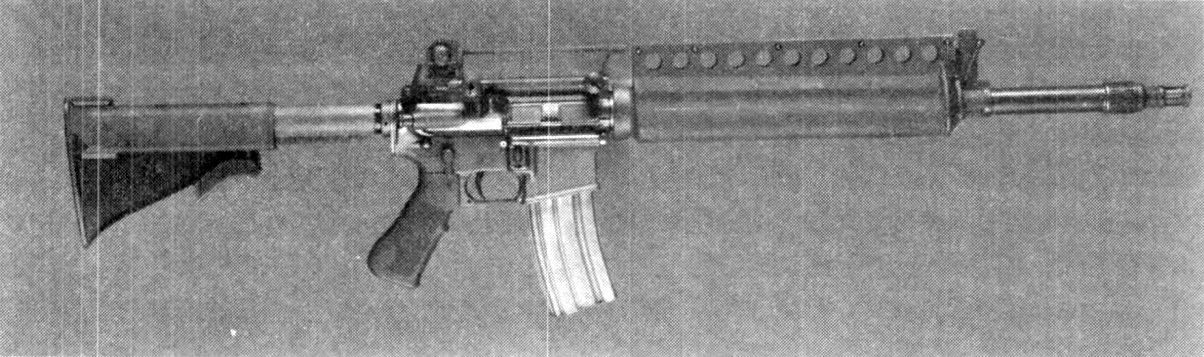
The ACR (Adaptive Combat Rifle) is a modular assault rifle featured in the Ghost Recon series, prized for its chameleon-like ability to shift roles mid-mission. Born from a real-world design originally created by Magpul Industries (as the Masada) and later produced by Remington and Bushmaster, this weapon in-game is the Ghost operator's Swiss Army knife—delivering a crisp balance of accuracy, rate of fire, and damage that feels reliable whether you're clearing a room or holding a ridge.
- First Appearance
- Ghost Recon: Advanced Warfighter 2
Lore & Background
The ACR was engineered as a modular replacement for aging carbines in special operations units, allowing operators to swap barrels and calibers in seconds. In the Ghost Recon universe, it's the quiet workhorse—never flashy, but always trusted. Its low-recoil gas system and ergonomic stock make it a natural extension of the shooter, excelling in tight urban corners and across open fields alike. Ghosts prize the ACR for its bottomless customization: optics, grips, suppressors, and barrel lengths can transform it from a stealthy whisper to a room-clearing brawler. While the M4A1 might steal the spotlight, the ACR has carved its own legend among players who value smooth handling and consistent, punishing damage. It appears across multiple titles, often as the standard-issue companion for Ghost teams—a silent testament to its battlefield pedigree.
In Their Own Story
Rain slicked the rooftop as Sergeant Holt settled behind his ACR. The red dot sight cast a faint amber glow in the downpour. Below, the target weaved through the market's canvas awnings. Holt breathed slow, thumbed the stock's cheek riser up a notch, and murmured, 'One shot.' The rifle coughed—a tight, dampened thud. The target crumpled. In the extraction chopper, Holt wiped the bolt carrier clean, the familiar oil-and-cordite scent grounding him. The ACR would be ready before he was.
Reader's Guide
The ACR is a medium-range predator that rewards controlled aggression. Its moderate rate of fire and gentle recoil let you stitch bursts onto center mass without fighting the muzzle climb, and its damage drops enemies in three to four well-placed rounds. In most Ghost Recon titles, it unlocks early and stays viable through endgame thanks to its deep customization pool. For close-quarters, pair it with a red dot or holographic sight and a vertical foregrip to tame recoil. For longer sightlines, swap to an ACOG or variable scope. A suppressor keeps you off enemy radars during stealth ops. The standard 30-round mag handles most fights, but extended mags give you breathing room in protracted firefights. The ACR shines in a fluid, cover-to-cover playstyle—dart between shadows, then push hard when you have the angle. It's lethal in urban alleys and open fields alike. Just don't try to out-sniper a marksman rifle at extreme range; the ACR is a master of the middle ground, not a specialist. Trust it to handle anything you throw at it, and it won't let you down.
Did You Know?
- The ACR in Ghost Recon is modeled after the real-world Remington ACR, which was originally designed by Magpul Industries—the same company behind the iconic PMAG magazine.
- In Ghost Recon: Future Soldier, the ACR can be fitted with a compact CQB barrel that shaves off inches for tight breaching ops, but at the cost of velocity and range.
- The ACR's name stands for Adaptive Combat Rifle, a nod to its real-life modular design that lets operators swap between 5.56mm and 6.8mm calibers to adapt to mission needs.
- The rifle appears in multiple Ghost Recon titles, including Advanced Warfighter 2 and Wildlands, where it's often a player favorite for its jack-of-all-trades balance—never the best at one thing, but always good enough.
- The ACR made its series debut in Ghost Recon: Advanced Warfighter 2, not Future Soldier—cementing its legacy long before the 2024 timeline.
Origins and Design Philosophy
The genesis of the M16 traces back to a pivotal shift in American military doctrine following World War II and the Korean War. Early attempts to replace the M1 Garand with select-fire variants proved disappointing, while the powerful .30 caliber rounds favored by senior commanders resulted in rifles that were difficult to control during automatic fire. Combat experience against the AK-47 highlighted the need for an intermediate solution: a weapon lighter than the M14 but more potent than the underpowered M2 carbine. This realization led General Willard G. ArmaLite responded by scaling down their successful AR-10 design to create the AR-15. Engineered with forged aluminum receivers and plastic stocks, this innovative platform utilized small-caliber bullets designed to destabilize upon impact, maximizing wounding potential while reducing recoil. This allowed soldiers to carry significantly more ammunition and sustain higher rates of fire with minimal jamming, fundamentally altering the balance between firepower and portability for infantrymen.
Evolution Through Conflict
The M16 family evolved rapidly as it transitioned from a prototype into the standard issue weapon for the United States military. As warfare tactics changed in subsequent decades, the platform continued to adapt. The introduction of the M16A2 in the mid-1980s brought significant improvements, including a heavier barrel, an adjustable rear sight, and a three-round burst selector to conserve ammunition while firing the more powerful M855 cartridge. Later iterations like the M16A4 further modernized the design by replacing fixed carrying handles with removable ones and integrating quad Picatinny rails, allowing for the mounting of advanced optics and ancillary devices essential for modern combat scenarios.
Global Production and Adoption
The M16's influence extends far beyond American borders, establishing itself as one of the most widely produced firearms in history. With total worldwide manufacturing reaching approximately eight million units, it stands as the most-produced weapon of its 5.56mm caliber class. Its design philosophy proved so effective that numerous armed forces around the globe adopted various iterations of the rifle for their own service needs. This massive scale of production was facilitated by a design that prioritized mass manufacturability; parts were stamped rather than hand-machined, allowing for efficient industrial output. While the United States military eventually began replacing frontline M16s with the shorter, lighter M4 carbine to better suit urban and vehicle-based warfare, the legacy of the original rifle remains ubiquitous. Its widespread adoption cemented the 5.56mm round as a global standard, influencing small arms development for decades and ensuring that the AR-15 lineage remained a dominant force in military arsenies worldwide.
Legacy and Modern Replacement
Despite its long tenure as the primary infantry weapon of the United States, the M16 has finally reached the end of its frontline service life. For over half a century, it defined American combat capability, but advancements in technology necessitated a new direction. In April 2022, the U.S. Army announced the selection of the SIG MCX SPEAR as the winner of the Next Generation Squad Weapon Program, designating it the M7 rifle to replace both the M16 and M4 platforms. This decision marks a significant departure from the 5.56mm caliber that has been standard since the 1960s, signaling a return to larger calibers to counter modern body armor and threats. While the M16 is being phased out of active combat units, its impact on small arms design is undeniable. The transition to the M7 represents not just an upgrade in hardware, but a culmination of decades of lessons learned from the M16's extensive operational history across multiple conflicts.
Gallery
Frequently Asked Questions
What is the ACR (Adaptive Combat Rifle) in Ghost Recon?
The ACR is a modular 5.56mm assault rifle introduced in Ghost Recon: Future Soldier, designed to adapt its configuration for various combat scenarios. It serves as a versatile primary weapon that balances accuracy and fire rate for Ghost operators.
What makes the ACR's role unique compared to other weapons?
Its defining feature is the ability to shift roles mid-mission by swapping components, effectively acting as a Swiss Army knife for tactical situations. This modularity allows players to tailor the rifle's performance specifically to the immediate threat at hand.
When did the ACR first appear in the franchise?
The weapon made its debut in Ghost Recon: Future Soldier, marking a significant shift towards realistic customization in the series. It has since become a staple for operators who require flexibility across different mission types.
What are the standard specifications of the ACR?
Standard configurations include a 30-round magazine capacity and fire modes covering both semi-automatic and fully automatic bursts. The rifle fires 5.56×45mm NATO ammunition, providing reliable stopping power for close-quarters and medium-range engagements.
Why is the ACR considered important to Ghost operators?
It is prized for its reliability in diverse environments, whether clearing a room or holding a defensive ridge. Its adaptability ensures that Ghosts can maintain superiority regardless of how quickly mission parameters change.
More in Items & Equipment
Elsewhere in the Ghost Recon universe
Spotted an error? Know more?
This is a living reference — every entry is fact-audited, and reader corrections feed straight into our audit queue. Suggest an edit · See this site's audit record