
Tom Clancy
The man who made military fiction feel real.

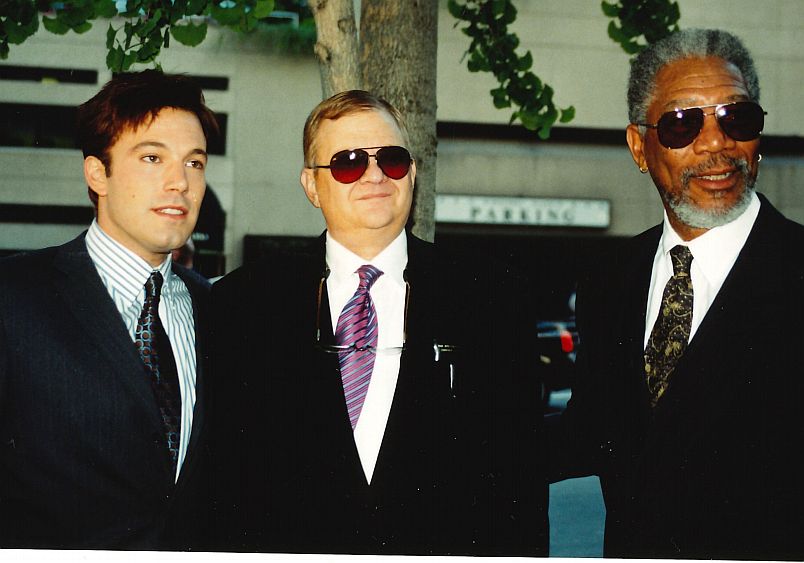
The Conmunity - Pop Culture Geek from Los Angeles, CA, USA · CC BY 2.0
Tom Clancy is the namesake and creative foundation of the Tom Clancy's video game franchise, including Ghost Recon. A bestselling author of military techno-thrillers, his name became synonymous with authentic, near-future tactical warfare narratives. While Clancy himself did not directly develop the games, his literary brand—emphasizing geopolitical realism, advanced technology, and special operations—shaped the core identity of the franchise.
- Role
- Namesake and creative inspiration
- Affiliation
- Tom Clancy's franchise (including Ghost Recon)
Verified Timeline
Lore & Background
Tom Clancy's influence on Ghost Recon is foundational. His novels, such as Rainbow Six and The Hunt for Red October, established a template for modern military storytelling: meticulous attention to real-world doctrine, plausible technology, and morally complex operators. The Ghost Recon series directly channels this ethos, portraying elite U.S. soldiers (Ghosts) using cutting-edge gear in near-future conflicts. Clancy's brand lent the games an air of authenticity that distinguished them from more fantastical shooters. Ubisoft, which acquired perpetual licensing rights, continues to release Tom Clancy's titles. In the game's lore, Clancy's novels are often referenced as background material for missions, and his thematic fingerprints—such as the threat of global terrorism and the role of private military contractors—appear throughout the series' narratives.
In Their Own Story
The briefing room was dim, lit only by the glow of a holographic map. The Ghost team leader studied the op order, its cover stamped with the familiar red-and-black logo: Tom Clancy's Ghost Recon. He remembered reading Clancy's books as a cadet—stories where every gadget had a real-world counterpart, every decision a weight of consequence. Now, years later, he was living those pages. The mission parameters were clear: neutralize the rogue PMC before they could sell the stolen drone tech. No room for error. As he synced his helmet HUD, he thought of Clancy's words: 'The difference between fiction and reality? Fiction has to make sense.' In the Ghosts' world, reality made its own brutal sense.
Reader's Guide
Tom Clancy's name was licensed to Ubisoft for video game use beginning in the late 1990s. Red Storm, co-founded by Clancy himself, ensured the games adhered to his vision of tactical realism. The original Ghost Recon was praised for its squad-based tactics and authentic weapon handling, setting a standard for the genre. Platforms for the original Ghost Recon included Windows, Xbox, PlayStation 2, and GameCube. Reception was highly positive, with critics lauding its difficulty and realism.
Did You Know?
- Tom Clancy's Ghost Recon Wildlands is the tenth installment in the Tom Clancy's Ghost Recon franchise.
- Wildlands was the first game in the Ghost Recon series to feature an open world environment.
- The game sold over 10 million units by March 2020.
- A sequel, Tom Clancy's Ghost Recon Breakpoint, was released on October 4, 2019.
- The game's competitive multiplayer mode was added as a free update on October 10, 2017.
Franchise Evolution and Open World Innovation
Tom Clancy's Ghost Recon Wildlands marked a significant strategic pivot for the long-running tactical shooter franchise by abandoning the futuristic sci-fi elements that defined its predecessors like Advanced Warfighter. Developed jointly by Ubisoft Paris and Milan, this tenth installment returned to the gritty, modern-day realism of the original series while simultaneously introducing an expansive open-world environment for the first time in the franchise's history. The game world is vast and diverse, encompassing nine distinct terrain types ranging from dense forests and towering mountains to arid deserts and salt flats. This setting is further enhanced by a dynamic weather system and a functional day-night cycle that directly influences gameplay mechanics; daylight offers superior visibility for spotting enemies, whereas nighttime provides crucial stealth advantages as guards fall asleep. By integrating these elements with a modern military aesthetic featuring real-world weapons and gear, the developers successfully created one of Ubisoft's largest open-world titles to date, fundamentally reshaping how players interact with the Ghost Recon universe.
Tactical Gameplay and Player Agency
The core experience centers on controlling members of Delta Company, a fictional elite unit known as the 'Ghosts,' within a third-person tactical shooter framework that offers an optional first-person view for precision aiming. Players are granted immense freedom in approaching objectives, utilizing stealth, melee combat, or various ranged weaponry to complete missions across Bolivia's diverse landscape. The game introduces unique mechanics such as deployable drones for tagging enemies and revealing objectives, alongside the ability to capture foes to use as human shields during firefights. Progression is driven by an experience system that allows character customization and gear upgrades, while the artificial intelligence operates with unscripted motivations rather than rigid patterns. Furthermore, players can traverse the map via dirt bikes, helicopters, or dune buggies, choosing whether to parachute into hot zones or infiltrate quietly on foot, ensuring every mission can be approached with a unique tactical strategy.
Narrative Structure and Cartel Hierarchy
Set in Bolivia during July 2019, the plot unfolds against the backdrop of a nation destabilized by the Santa Blanca Cartel, a Mexican drug syndicate led by the brutal El Sueño. The narrative is triggered when a bomb targets the American embassy and DEA agent Ricardo Sandoval is executed after his undercover cover is blown, prompting the deployment of a Ghost Recon fireteam to execute Operation Kingslayer. This joint mission involves the CIA, DEA, and JSOC working alongside Bolivia's elite special forces unit, La Unidad. The gameplay loop mirrors this narrative structure by dividing the map into twenty-one areas controlled by local leaders known as buchones, who manage four specific cartel divisions: Influence, Security, Production, and Smuggling. Players must systematically dismantle these operations by eliminating or capturing buchones to expose underbosses and eventually cripple the division heads, thereby weakening the cartel's grip on the country and making the supreme boss vulnerable.
Commercial Performance and Multiplayer Dynamics
Released globally in March 2017 for major consoles and PC, Wildlands achieved significant commercial success, selling over ten million units by March 2020 despite receiving mixed to positive critical reviews. The game's longevity was bolstered by its robust cooperative multiplayer mode, allowing up to four players to explore the open world and tackle campaign missions together, or play solo with customizable AI teammates who can be commanded or disabled for a 'lone wolf' experience. A competitive multiplayer component was later added via a free update in October 2017, featuring timed 4v4 elimination matches with revive mechanics that allow players to level up their specific character classes. The title's popularity paved the way for its sequel, Ghost Recon Breakpoint, which arrived two years later in October 2019, cementing Wildlands as a pivotal commercial and structural milestone in Ubisoft's publishing history.
Gallery



Frequently Asked Questions
Who is Tom Clancy?
He was a renowned author of military techno-thriller novels that prioritized authentic tactical warfare narratives. His name became synonymous with realistic special operations content across various media franchises.
Did he create the Ghost Recon games directly?
No, Clancy did not personally develop the video games or write their specific scripts. Instead, his literary brand provided the creative foundation and thematic guidelines for the developers to follow.
When did his name first appear on a game box?
The branding debuted with the release of Tom Clancy's SSN in 1996 before expanding into other tactical series like Ghost Recon. This established his legacy as a standard for military simulation software.
Is he still involved with the franchise today?
He passed away on October 1, 2013, so he is no longer actively involved in any production decisions. However, Ubisoft continues to release new titles under the Tom Clancy brand as a tribute to his work.
Why does his name matter for Ghost Recon?
His reputation guarantees a focus on geopolitical realism and advanced technology within the game's storytelling. Fans associate his name with high-quality depictions of modern special operations warfare.
More in Development & Legacy
Elsewhere in the Ghost Recon universe
Spotted an error? Know more?
This is a living reference — every entry is fact-audited, and reader corrections feed straight into our audit queue. Suggest an edit · See this site's audit record